Intro - Why Creative Is the New Targeting
Meta's ad platform has quietly rewritten the rules of paid advertising. According to Meta's own performance data, campaigns powered by Advantage+ and creative-led targeting now outperform manually targeted campaigns by up to 32% on cost per acquisition. For service-based business owners, that shift means one thing: your ad creative is your targeting. If your video clearly signals who it's for, Meta's algorithm will find those people, whether you set the audience or not.
That is why the businesses generating 50 to 100 qualified leads every month are not the ones with the biggest budgets. They are the ones running the right ad creative formats at volume. In this guide, you will learn the five Meta ad creatives crushing performance in 2026, how each one converts, and how to combine them into a testing system that compounds your results across Instagram, Facebook, and beyond.
🎥 Watch this video if you don't have time to read the full blog:
The Real Reason Most Service Businesses Are Losing Money on Meta Ads
Most service-based business owners still treat Meta ads the way they did in 2019. They obsess over audiences, lookalikes, and interest stacks, then wonder why their cost per lead keeps climbing. The problem is not the platform. The problem is the creative. Meta's machine learning now handles the targeting layer with far more precision than any manual setup, but it can only work with the signals your creative provides.
If your video ad does not clearly communicate the offer, the audience, and the outcome within the first three seconds, Meta cannot serve it to the right buyer. That is why so many campaigns stall at high CPMs and low click-through rates. The paid ads strategy that worked five years ago, tight targeting and polished commercials, is now the exact recipe for wasted spend.
The businesses winning right now have flipped the model. They invest in creative variety, produce video ads that look native to the feed, and let the algorithm distribute them to the right prospects. This is the core of a modern lead generation system: creative volume paired with creative diversity. The five formats below are the ones consistently driving qualified leads at the lowest cost per acquisition across service industries.
A Five-Format Framework for High-Performing Meta Ad Creatives
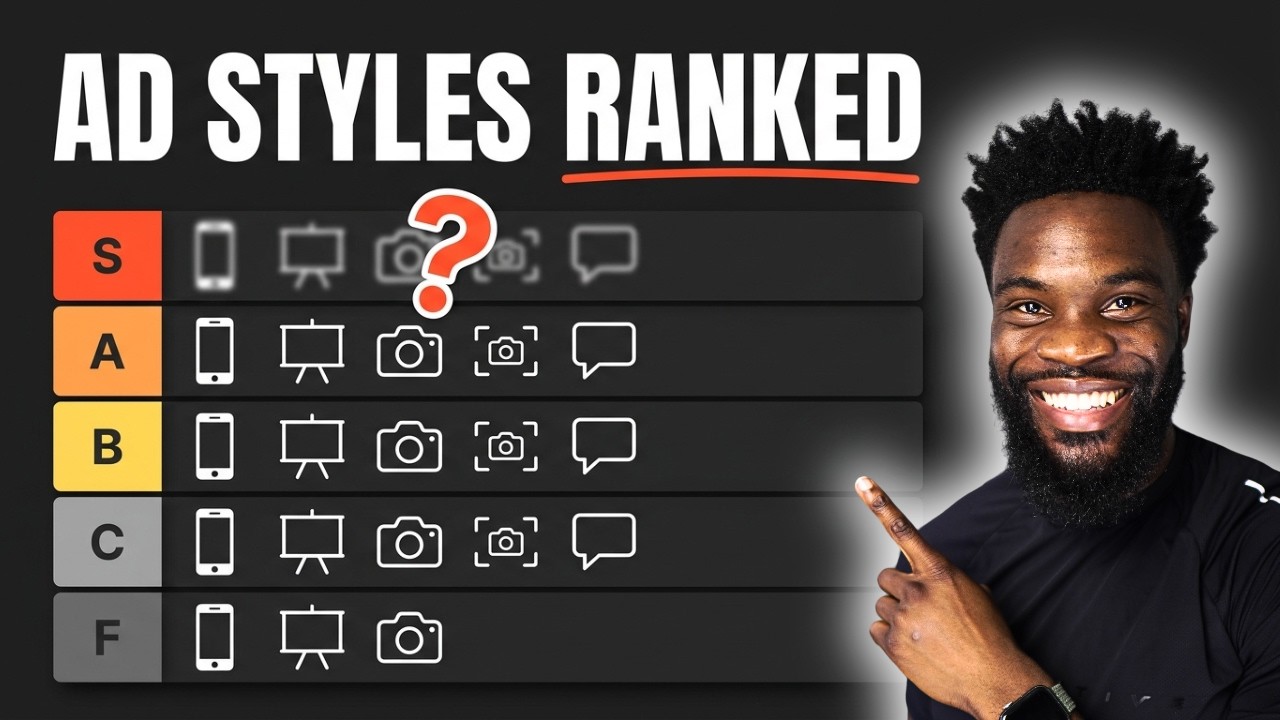
The strongest ad accounts run a mix of five distinct creative formats simultaneously. Each format serves a different psychological trigger, targets a different stage of buyer awareness, and produces a different type of lead. Running them together gives you signal-rich data and a resilient pipeline.
The Raw Selfie Ad That Blends Into the Feed
The raw selfie ad is the highest-performing native format on Meta right now. It works because it does not look like an ad. When a prospect scrolls past a person filming from their kitchen, car, or office with a phone at arm's length, their guard stays down. That extra half-second of attention is often all you need to land the hook.
Production is intentionally low. A phone, decent lighting, and a clear voiceover are enough. The script should open with a pattern interrupt aimed directly at your ideal client, for example, "If you run a plumbing business doing under 500k a year, this is for you." Then deliver a single insight, a single offer, and a single call to action. A UK-based accounting firm we advised replaced their studio-produced ads with raw selfie versions and cut cost per lead from £47 to £18 inside six weeks. The lesson is simple: polish signals advertising, and advertising signals scepticism.
The Whiteboard Video That Teaches Instead of Sells
Whiteboard videos work because they reframe the interaction. The viewer is no longer being sold to, they are being taught. That single shift dramatically increases watch time, which Meta rewards with cheaper distribution. All you need is a whiteboard, a smartphone, and a lapel mic.
The format works equally well for B2B and B2C service businesses. A financial planner can sketch out the three tax mistakes high earners make. A marketing agency can diagram a client acquisition funnel. A physiotherapist can illustrate the posture pattern behind chronic back pain. Because the viewer watches you build the explanation in real time, the ad feels like a mini masterclass rather than a pitch. Teaching creates trust, and trust converts.
The High-Production Talking Head That Signals Authority
The high-production talking head video, filmed in a studio with proper lighting and audio, plays a different role in your paid ads strategy. It rarely produces the cheapest leads, but it produces the highest-intent ones. When a prospect willingly sits through a polished, studio-shot video, they are self-qualifying as someone who values expertise and premium positioning.
This format is essential for high-ticket service businesses where lead quality matters more than lead volume. A business consultant charging £10,000 per engagement does not need 200 cheap leads, they need 15 serious ones. To make this format work, energy and charisma are non-negotiable. Pair strong on-camera delivery with fast-paced editing, B-roll cutaways, and on-screen text to keep the retention curve high.
The Green Screen Ad That Reacts to the World
Green screen videos are one of the most underused formats in service-based advertising. The concept is simple: you appear in front of an image, article, headline, or piece of data, and you deliver your take on it. The format works because it combines visual proof with personal commentary, and people believe what they can see.
A recruitment agency could react to a headline about UK unemployment figures. A cybersecurity consultant could break down a recent data breach story. A property investor could annotate a Rightmove listing to explain why the numbers do not work. Each of these creates a native, timely, and highly shareable ad that feels like content rather than promotion. Green screen ads also give you an endless supply of hooks, because every news cycle produces fresh material to react to.
The Client Case Study That Builds Instant Credibility
Client case study ads are the most persuasive format when structured correctly. A raw testimonial alone does not work, because a scrolling viewer has no context for who the client is or why they matter. The fix is a three-part structure: you deliver the hook and set the scene, the client shares the transformation, then you close with a clear call to action.
For example, a lead generation agency might open with, "This is how we helped a roofer in Manchester go from 4 quotes a week to 38." The client then explains what changed, the numbers, and the emotional shift. You return on camera with a specific next step, such as booking a strategy call. This structure removes friction, provides proof, and makes the ad feel like a story rather than a sales pitch.
Proof That This Creative Mix Actually Works
The five-format approach is not theory, it is a repeatable system producing measurable results across service industries. Consider a B2B IT support company running only polished studio ads at a cost per lead of £92. After introducing raw selfie and whiteboard formats into the mix, their blended cost per lead dropped to £34 within eight weeks, and their monthly qualified booked calls rose from 22 to 71. The polished ads remained in rotation, but they were no longer the primary spend driver.
A second example: a home renovation firm was struggling with a £16 cost per lead but suffering from low show-up rates on booked consultations. By adding client case study ads with the hook-testimonial-CTA structure, show-up rates jumped from 38% to 74%, and closed deals per month increased by 120%. The volume of leads barely changed, but the quality transformed because the case study ads pre-qualified prospects emotionally before they ever spoke to a salesperson.
A third case: a fitness coaching business tested green screen reaction ads against a trending news story about processed food regulation. That single creative angle produced a 4.2x return on ad spend across six weeks, outperforming every other creative in the account. The lesson is that creative diversity is not just a hedge against fatigue, it is an active source of breakout winners you cannot predict in advance.
Across every account we audit, the pattern repeats. Businesses running one or two creative formats hit a ceiling. Businesses running all five, with regular refreshes, break through that ceiling and compound their results month over month.
Where Meta Advertising Is Heading and How to Get Ahead
The direction of travel for Meta advertising is clear: creative volume, creative diversity, and AI-assisted iteration. Meta's Advantage+ suite already automates most of the targeting decisions, and by 2026, most performance gains will come from how quickly you can produce, test, and refresh creative rather than how cleverly you configure a campaign.
Three shifts will define the next twelve months. First, AI-generated variations of winning creatives will become standard. Tools that repurpose a single selfie ad into 20 hook variants, 10 caption styles, and multiple aspect ratios will separate the accounts that scale from the ones that plateau. Second, creator-style content will dominate paid feeds, blurring the line between organic influence and paid distribution. Businesses that invest in on-camera talent, whether internal team members or hired creators, will outperform those relying purely on studio content. Third, the feedback loop between CRM data and ad creative will tighten. Feeding your closed-won client profiles back into Meta's algorithm, combined with creative that mirrors those buyers, will drive dramatic efficiency gains.
The actionable step is to build a creative production system now. Commit to producing at least four new ad variations per week across the five formats. Track hook retention rates at the three-second and fifteen-second marks. Kill underperformers within seven days and double down on winners. Treat your marketing workflows like a factory, not a project. This is how the top-performing service businesses will scale in 2026 while their competitors keep tweaking audiences and wondering what changed.
Ready to Build Your AI-Powered Ad System
The five creative formats above are the foundation, but creative alone will not scale your business. You also need the systems to nurture leads, qualify them at speed, and convert them into paying clients. That is where AI integration transforms a good ad account into a growth engine.
If you are ready to identify exactly where AI can streamline your advertising, follow-up, and conversion process, book your free AI Audit today at https://scalingedge.ai/org-ai. We will map the highest-leverage automation opportunities inside your business and show you how to turn your ad spend into a predictable pipeline of qualified clients.