Intro - Two Businesses, Same Service, Very Different Outcomes
In 2026, two business owners can sell the same service, work the same hours, and target the same market, yet one will quietly stall while the other scales rapidly. The difference is not effort, talent, or even budget. The difference is how intelligently they are using AI for B2B growth across outreach, advertising, and conversations. According to McKinsey's 2024 State of AI report, organisations that have embedded AI into core revenue functions are already reporting double-digit gains in lead conversion and sales productivity. That gap will widen sharply in 2026.
This guide breaks down four practical, revenue-focused ways B2B companies are using AI to scale: niche clarity, AI-assisted outreach, AI-enhanced paid advertising, and conversational AI. You will learn how each layer connects, what specific tools and workflows to use, and what numbers to expect at each stage of the funnel so you can model the impact on your own pipeline.
🎥 Watch this video if you don't have time to read the full blog:
Why Most B2B Companies Are Still Leaving Money on the Table
Most B2B founders are not behind because they lack ambition. They are behind because they are still running 2022 playbooks in a 2026 market. They send generic LinkedIn requests, blast cold emails written by junior staff, micromanage ad accounts, and reply to inbound leads hours or days after the buying intent has cooled. Meanwhile, their competitors are quietly compounding gains with AI-driven lead generation, intelligent personalisation, and conversational automation.
The misconception is that AI is a single tool you bolt onto your existing process. It is not. AI is a layer that sits across the entire revenue engine, from targeting to messaging to follow-up. When B2B sales automation, AI lead qualification, and AI outreach personalisation are integrated correctly, they create compounding leverage. Each lead costs less to acquire, each conversation closes faster, and each team member produces more output without burning out.
The companies that understand this shift early are pulling ahead. The ones treating AI as a novelty are about to spend the next 18 months wondering why their pipeline is shrinking.
A Four-Part Framework for Scaling a B2B Business With AI
The system that consistently produces results in B2B is not complicated, but it does require each layer to be built deliberately. Here is the framework.
Sharpening Your Niche So AI Can Actually Help You
AI works best when it has constraints. The clearer your niche, the more powerful every downstream system becomes. There is an enormous difference between saying "I help businesses with AI" and saying "I help UK-based finance companies offering business loans between one and ten million pounds automate lead follow-up and sales bookings using AI."
That level of specificity changes everything. Your messaging sharpens. Your offer becomes more valuable. Your AI prompts produce relevant outputs instead of generic ones. Before you touch outreach, paid ads, or automation, answer three questions: who do you want to work with, what problem do they already have, and what outcome do they actually want. Once you have clarity, AI becomes a tool that prints relevance at scale rather than noise.
Building an AI-Assisted LinkedIn and Email Outreach Engine
Once your niche is clear, outreach is the fastest way to generate revenue. Most large B2B companies are already doing some combination of LinkedIn messaging, cold email through tools like Apollo or Instantly, and in-person networking. The principle is the same across all of them: AI should be doing the heavy lifting.
Take LinkedIn as an example. With a Sales Navigator account, you can add roughly 200 prospects per week, or 800 per month. Assume a conservative 30 percent acceptance rate. That is 240 new connections every month. If 25 to 50 percent of those connections reply to a well-crafted opening message, you are looking at 60 to 120 conversations a month. If just 5 to 10 percent of those conversations turn into booked consultation calls, that is 6 to 12 new qualified sales calls every single month from one channel alone.
Now scale that across three or five outbound team members, each running the same AI-assisted workflow, and you can see how quickly this compounds. The AI layer is what makes it work at volume. Before sending a message, the system analyses the prospect's profile, bio, company website, and recent posts. Then it drafts a hyper-personalised opener that references something specific to that individual. The result is a message that reads like it was written by a thoughtful human, not a spam bot.
Using AI to Win the Paid Advertising Game
The next layer is paid advertising, and this is where AI compounds results fastest. There are three places AI now meaningfully changes ad performance.
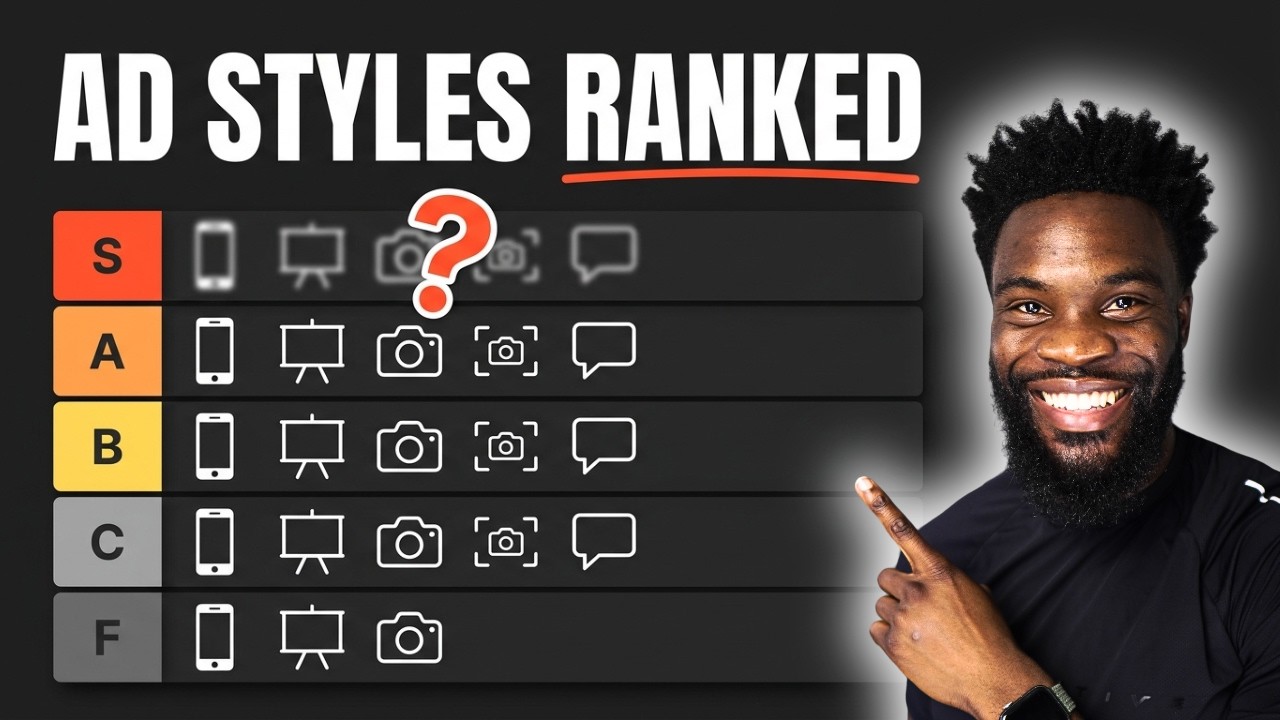
The first is creative production. For static ads, tools like Google's Nano Banana can generate striking visual concepts in minutes. For video ads, Google Veo 3 can produce broadcast-quality assets without a film crew. The thumbnail for the original video this article is based on was generated entirely through AI, and the same approach applies to scroll-stopping ad creative.
The second is scripting. AI can generate hooks, headlines, and full ad scripts in seconds. This means you can test ten or twenty creative variants in the time it used to take to produce one, drastically lowering your cost per winning ad.
The third is platform-level optimisation. Meta and Google have embedded AI deeply into targeting, bidding, and delivery. Your job is no longer to micromanage audiences and placements. Your job is to feed the algorithm strong creative, clear offers, and clean conversion data. The marketers winning in 2026 are not the ones tweaking bid caps at midnight. They are the ones producing better inputs and letting the algorithm optimise the rest.
Deploying Conversational AI to Convert Leads Around the Clock
This is where the entire system comes together. Once leads arrive from outreach or paid ads, AI should handle the first layer of communication: instant responses, qualification questions, objection handling, and in many cases, booking the call automatically.
Channel choice matters. In the UK and across most of Europe, WhatsApp dramatically outperforms email and SMS for response rates. Moving lead conversations into WhatsApp with a conversational AI layer routinely doubles or triples reply rates compared to email follow-up sequences.
The real advantage is operational. AI does not sleep, does not call in sick, does not forget to follow up on day three, day seven, or day thirty. It messages leads instantly, qualifies them against your criteria, and books calls into your calendar while you are asleep. That is not a productivity hack. That is a structural shift in how a B2B business operates. Platforms like GoHighLevel already support these workflows; the differentiator is knowing how to design and deploy them properly.
Proof That the Framework Actually Moves Revenue
Consider a UK-based B2B consultancy selling implementation services to mid-market finance firms. Before AI integration, the founder and one sales rep were sending around 150 manual LinkedIn messages per week, generating roughly four booked calls per month at a close rate of 25 percent. Revenue was steady but plateaued.
After layering in AI-assisted personalisation on LinkedIn, AI-generated ad creative on Meta, and a conversational AI agent on WhatsApp handling first-touch qualification, the same two-person team scaled to over 800 prospect touches per week, 11 booked calls per month from outbound alone, and an additional 7 inbound calls per month from paid social. Within four months, monthly recurring revenue grew by approximately 140 percent without adding headcount.
A second example: a B2B SaaS company offering compliance software to logistics operators integrated an AI qualification agent into their inbound funnel. Previously, inbound leads waited an average of 6 hours for a human response, and only 18 percent booked a discovery call. After deploying conversational AI that responded within 30 seconds, qualified the lead, and offered three calendar slots, booking rates climbed to 42 percent. That is a 133 percent lift in conversion from a single automation layer, with zero increase in marketing spend.
The pattern across both examples is identical. AI did not replace the humans. It removed the bottlenecks, accelerated the response, and freed the team to focus on closing rather than chasing.
What B2B Leaders Should Be Building Right Now
Looking into 2026 and beyond, several trends will separate the winners from the strugglers in B2B.
First, AI search visibility will become as important as traditional SEO. Buyers are increasingly asking ChatGPT, Perplexity, and Google's AI Overviews for recommendations before they ever visit a website. If your business is not optimised to appear in those answers, you are invisible to a growing share of high-intent buyers.
Second, AI receptionists and AI voice dialers will move from novelty to standard. Inbound phone calls handled by AI agents that can qualify, schedule, and even close low-ticket deals are already being deployed by forward-thinking B2B firms. Expect this to become a baseline expectation by late 2026.
Third, the bar for personalisation will keep rising. Generic outreach is already underperforming. By next year, prospects will expect every message to reference something specific about their role, company, or recent activity. This is only feasible at scale with AI in the loop.
The practical advice is simple. Pick one layer of the framework and implement it properly before moving to the next. Most businesses fail because they try to automate everything at once. Start with niche clarity, then layer in AI outreach, then add paid advertising, then deploy conversational AI. Each layer multiplies the impact of the one before it.
Ready to Build Your AI Revenue System
The opportunity in 2026 is not about replacing humans with AI. It is about using AI as leverage so the same team can produce two, three, or five times the output without burning out, while improving margins at the same time. The businesses that build this stack now will spend the next 24 months compounding their lead, while everyone else plays catch-up.
If you are ready to identify exactly where AI can streamline your B2B business, accelerate lead generation, and increase conversions, book your free AI Audit today at https://scalingedge.ai/org-ai. You will walk away with a clear, prioritised roadmap for which layer to build first and the expected impact on your pipeline.