From Apprentice to Mayoral Candidate: Lessons in Resilience and Community Leadership
Intro - The Story Behind the Smoothest Talker on TV
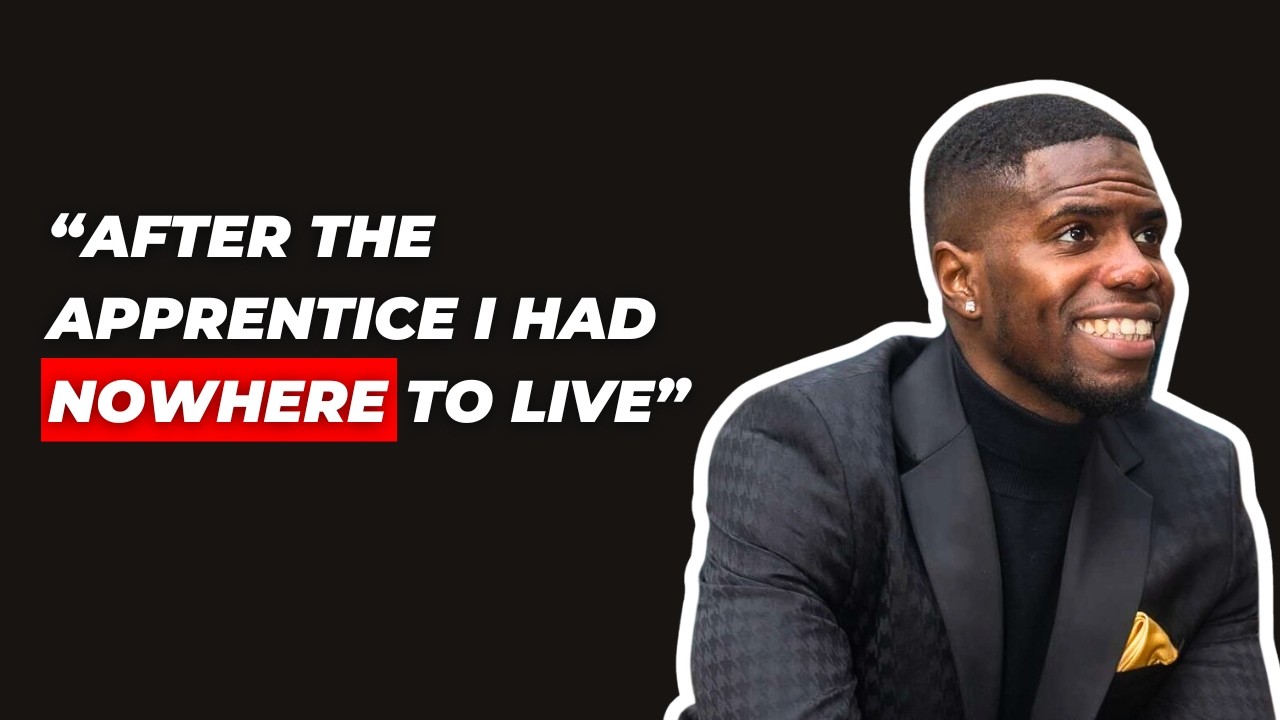
National television usually looks like a finish line. For Kayode Damali, the former Apprentice contestant now running as an independent candidate for Mayor of Lewisham, it was something else entirely: a six-month stretch with no home, no income, and no fallback plan. His story exposes a truth that founders and creators rarely talk about openly. Visibility is not the same as stability, and personal branding only becomes valuable when it is paired with a long-term strategy.
In this article, you will learn how Kayode rebuilt his career after his events business collapsed, why he treats every four years like a personal World Cup, how he grew his TikTok by testing content daily, and what his independent campaign reveals about leadership, transparency, and community-led change. You will also see how his journey maps directly onto the principles modern entrepreneurs and local leaders need to scale influence, win trust, and build systems that last.
🎥 Watch this video if you don't have time to read the full blog:
The Hidden Cost of Public Exposure
Most people assume that appearing on a show like The Apprentice automatically translates into business growth. The reality is far less glamorous. Kayode reached week seven of the 2018 series, pitching a tech app idea backed by a business plan he describes as exhaustively thorough. Yet while millions of viewers watched him on screen, his personal finances were collapsing. Filming meant six months without income. His events business in the Northwest, which had been thriving since 2013, was no longer producing the January revenue spikes it once relied on. By the time the show aired, he had nowhere to live.
This is a pattern that repeats across the creator economy and the local business landscape. Founders often chase exposure without building the underlying revenue systems, brand infrastructure, or content engines that convert attention into income. A viral moment is a spotlight, not a foundation. Without lead capture, follow-up automation, and a clear monetisation path, the spotlight fades and leaves the founder exactly where they started, only with more pressure and more eyes watching.
Kayode's response is instructive. Rather than chasing the tech idea he had originally planned to launch, he pivoted to the skill he could monetise immediately: speaking. Corporate bookings, presentations, and paid talks gave him cash flow while he rebuilt. The lesson for entrepreneurs is clear. When exposure arrives before infrastructure, you must lean on your most monetisable skill, stabilise, and then return to your bigger vision once the foundation is solid.
A Four-Part Framework for Turning Exposure into Equity
Kayode's trajectory from contestant to candidate offers a replicable framework for anyone trying to convert public attention into long-term influence. It rests on four pillars: positioning, consistency, community, and conviction. Each pillar maps directly onto the marketing systems that high-growth founders use to scale.
Position Yourself Around a Specific Audience, Not a Generic Topic
When Kayode restarted his TikTok strategy in 2025, he had been stuck at 6,000 followers since 2019. His breakthrough did not come from chasing trends. It came from auditing what he genuinely cared about, what his audience actually engaged with, and where he had a credible voice. He tested three content pillars daily: running, business, and Lewisham. Within months, the Lewisham content dominated. By the time he reached 10,000 followers on Instagram, the growth was not random. It was the result of disciplined testing against a clearly defined local audience.
For founders, the lesson is direct. Pick a niche narrow enough that you can own it. A generic business account competes with Alex Hormozi, Steven Bartlett, and thousands of others. A locally focused account about a specific borough, industry, or pain point has almost no competition, because authenticity at the local level cannot be faked. AI tools can help you analyse engagement data, identify which posts convert, and refine your content calendar, but the underlying choice of niche must come from genuine knowledge and lived experience.
Build a Daily Content System You Can Actually Sustain
Consistency is the differentiator most creators underestimate. Kayode committed to filming three short videos every morning before stepping out of his car, one on each pillar. No studio, no editing suite, no team. Just a phone, a clear structure, and a non-negotiable cadence. Over time, the data revealed which themes resonated, and he doubled down accordingly.
This is exactly how modern content systems should be built. Start with low-friction production, layer in measurement, and let audience behaviour dictate where you invest more effort. Once a content pillar proves itself, you can apply AI workflows to repurpose clips, generate captions, schedule posts, and analyse comments at scale. The system runs whether you are tired, busy, or travelling, because the friction has been engineered out at the start.
Treat Local Knowledge as a Competitive Moat
One of the most overlooked advantages in marketing is hyperlocal expertise. Kayode's Catford and Lewisham content connects because he has lived the streets he describes. He went to Forest Hill Boys, played for Bromley FC, witnessed the changes on Rushey Green over twenty years, and lost friends to violence in the borough. When he posts about cleaning up Catford, the audience hears authenticity, not commentary.
For businesses, this principle scales. A local accountancy firm that posts about specific high street trends in its town will out-rank a national competitor on geographic intent searches. A gym owner who documents the actual community inside the gym will out-convert a generic fitness influencer. Local relevance is one of the few moats that algorithms genuinely reward, because platforms want to surface content that keeps users engaged in their immediate context.
Lead with Conviction, Not Polish
When Kayode applied for The Apprentice in 2018, he stopped trying to sound polished. He wrote the application at quarter to midnight, raw and honest, admitting his business was flopping. That application got him through. The same principle drives his mayoral campaign. He talks openly about council attendance ranking 234th out of 275, about the lack of transparency in candidate paperwork, and about driving across the borough during a bank holiday weekend to collect thirty signatures because the council released the rules too late for anyone outside the system to prepare.
Audiences and voters are saturated with polished messaging. Conviction breaks through because it signals that the speaker has nothing to hide. For founders, this means founder-led content, unscripted long-form interviews, and transparent breakdowns of revenue, mistakes, and lessons. These formats build trust faster than any paid advertising campaign, and they compound over time as the audience returns to the original source.
Expert Insights from the Ground
Consider how this framework plays out in real numbers. A South London creative studio recently shared that their first month of trading produced inconsistent revenue, with five sales arriving in a single day after weeks of silence. When the founder posted a transparent breakdown of the journey rather than a curated highlight reel, the video drove direct messages from other studio owners, prospective clients, and collaborators. The transparency itself became the marketing engine. Within thirty days the studio had built a pipeline of warm conversations that traditional paid acquisition would have taken three to four months and several thousand pounds to generate.
A second example comes from the campaign itself. Kayode's TikTok grew from 6,000 followers to over 10,000 in a matter of months once he committed to the three-video daily cadence and narrowed his focus to Lewisham-specific content. The follower number matters less than the qualitative shift. Local journalists began reaching out. Residents started recognising him at events. Volunteers signed up for door-knocking sessions. The content did not just build an audience, it built a movement, and it did so without a single pound of paid promotion.
A third pattern emerges from the speaking circuit Kayode used to stabilise after The Apprentice. Within twelve months of leaving the show, corporate bookings replaced the lost events income, with average fees climbing as his media profile compounded. The data point worth noting is the multiplier effect of owned media. Every appearance on a podcast, panel, or stage fed his social channels, which in turn drove more inbound enquiries. A founder who treats every public moment as an asset that can be clipped, repurposed, and distributed will compound their reach at a rate that paid media cannot match. One thirty-minute interview, properly systemised, can produce sixty short-form clips, ten written articles, and a year of email content.
A fourth case worth studying is the gym operator who features briefly in the conversation, Omami Spindles, who launched a boxing facility in Brixton after appearing on The Apprentice. Her approach mirrors the same framework: take the platform exposure, immediately ground it in a specific physical or geographic community, and let the offline experience drive online word of mouth. The combination of credibility from television and tangible community presence has produced footfall numbers that pure digital marketing would struggle to replicate at the same cost.
Future Trends and How to Implement Them Now
The shift Kayode represents is part of a broader movement in local marketing and civic engagement. Three trends are worth watching, and each has a direct implementation path for founders and local leaders.
The rise of local-first content. Algorithms on TikTok, Instagram, and YouTube Shorts increasingly favour content tied to specific locations. Postcodes, borough names, and neighbourhood landmarks all serve as discovery signals. Businesses that geotag, name-check streets, and feature recognisable local visuals will out-perform generic competitors. Start by auditing your last twenty posts and asking whether a local viewer could identify your area from the content alone. If not, rebuild your calendar with location-specific hooks.
The integration of AI into civic and small business workflows. Kayode openly described using AI tools to research election processes when council information was unavailable. This is the new normal. Founders and local leaders will increasingly use AI to summarise council documents, draft policy responses, generate constituent communications, and analyse community sentiment from comments and surveys. The competitive edge belongs to those who build these workflows now, before the tools become commoditised. Start with one repetitive task, such as responding to common enquiries or summarising weekly performance data, and automate it end to end.
The collapse of the gatekeeper model. Kayode's frustration with delayed council information, opaque candidate processes, and inaccessible bureaucracy reflects a wider impatience with institutions that hoard knowledge. Audiences trust creators and independents who explain how systems work. For businesses, this means publishing the how, not just the what. Show your pricing logic, explain your delivery process, document your customer journey publicly. The companies that demystify their industries will inherit the trust that legacy players are losing.
To implement these shifts immediately, begin with three actions this week. First, identify the single local or niche community you can credibly speak to and commit to thirty days of daily short-form content within that focus. Second, choose one operational task in your business that consumes more than two hours per week and design an AI-assisted workflow to handle it. Third, publish one piece of long-form content that explains an industry process your customers usually find confusing. These three moves compound quickly and lay the groundwork for the scaling systems that the next generation of leaders, whether civic or commercial, will rely on.
Where to Go from Here
Kayode's story is a reminder that resilience, consistency, and clarity of purpose can transform exposure into lasting influence. The same principles apply whether you are running for office, scaling a service business, or building a personal brand. The founders who win the next decade will be the ones who pair authentic positioning with intelligent automation, turning every conversation, post, and appearance into a compounding asset.
If you are ready to identify exactly where AI can streamline your business, sharpen your positioning, and convert your audience into consistent revenue, book your free AI Audit today at https://scalingedge.ai/org-ai. The audit will map your current systems, highlight the highest-leverage automation opportunities, and give you a clear plan to scale without sacrificing the authenticity that makes your brand worth following in the first place.


